

nSTRIDE for Knee Osteoarthritis
A Treatment Option for Knee Osteoarthritis
Living with knee osteoarthritis can affect everyday activities—from walking and climbing stairs to staying active and doing the things you enjoy.
At Ontario Regenerative Medicine, treatment begins with understanding your knee, your symptoms and your individual circumstances.
For appropriate patients diagnosed with knee osteoarthritis, nSTRIDE may be one of the treatment options considered following medical assessment.
Understand your knee. Explore your options. Make an informed decision.
Is nSTRIDE Right for Me?
nSTRIDE is intended for the treatment of knee osteoarthritis and associated symptoms.
Whether it is appropriate for you requires an individual medical assessment.
Your ORM physician will consider factors such as:
- your diagnosis
- your symptoms
- your medical history
- previous treatments
- relevant imaging or investigations
- your mobility and activity
- other factors relevant to your care
Not every patient with knee symptoms has osteoarthritis, and not every patient with knee osteoarthritis will necessarily be an appropriate candidate for nSTRIDE.
That’s why we start with an assessment.

What is nSTRIDE?
nSTRIDE is an autologous protein solution—or APS—system.
The nSTRIDE APS Kit is designed to prepare an autologous protein solution from a small sample of a patient’s own blood at the point of care.
The resulting APS is administered by intra-articular injection for the treatment of knee osteoarthritis and associated symptoms.
nSTRIDE is authorized for sale by Health Canada.
What does “Autologous” Mean?
Autologous means that the material used during the procedure comes from the same patient receiving it.
With nSTRIDE, a small sample of your blood is collected and processed using the nSTRIDE APS system.
The prepared solution is then administered into your knee as part of the procedure.
What Happens During an nSTRIDE Procedure?

1. Blood Collections
A small sample of blood is collected from your arm.

2. APS Preparation
The blood sample is processed at the point of care using the nSTRIDE APS Kit to prepare the autologous protein solution.
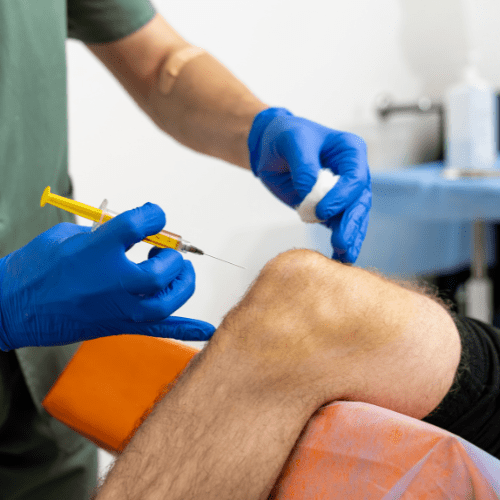
3. Intra-Articular Injection
The prepared APS is administered into the affected knee by intra-articular injection.
Your healthcare provider will explain the procedure, what you should do before your appointment and what to expect afterward.
Why Assessment Comes First
Knee Pain isn’t a Diagnosis
There are many possible reasons for knee pain, stiffness and changes in mobility.
Before recommending nSTRIDE or another treatment, your physician needs to understand what’s happening in your knee.
Your assessment may include a discussion of:
- where and when you experience symptoms
- how your knee affects everyday activities
- previous injuries
- previous diagnoses
- treatments you have already tried
- relevant imaging
- your medical history
- your individual goals
Following assessment, your physician can discuss whether nSTRIDE or another management approach may be appropriate for you.
Why Consider an nSTRIDE Consultation at ORM?
Orthopaedic Assessment. Individualized Care.
At Ontario Regenerative Medicine, nSTRIDE isn’t presented as the answer for every painful knee.
It is one potential option for appropriately selected patients with knee osteoarthritis.
Our approach emphasizes:
Medical assessment
Understanding your diagnosis and individual circumstances comes first.
Appropriate patient selection
Your physician determines whether nSTRIDE should be considered based on your individual assessment.
Informed decision-making
You will have an opportunity to discuss the procedure and ask questions before deciding whether to proceed.
Individualized care
Treatment recommendations are based on your specific clinical circumstances rather than a one-size-fits-all approach.

Meet Dr. Eric Robinson
Orthopaedic Expertise at ORM
Dr. Eric Robinson is an Orthopaedic Surgeon who has worked with Ontario Regenerative Medicine since 2018.
His ORM practice focuses on the assessment and non-surgical management of joint and musculoskeletal concerns.
Dr. Robinson brings extensive experience in orthopaedic medicine to the assessment of patients looking to better understand their joint health and available management options.
What Should I Expect After the Procedure?
Your healthcare provider will provide instructions specific to your procedure and individual circumstances.
Before proceeding, you should discuss:
• what to expect following the procedure
• activity recommendations
• possible side effects and risks
• when to contact the clinic
• appropriate follow-up
• realistic expectations for your individual situation
Responses to medical procedures vary between individuals.
Frequently Asked Questions
Is nSTRIDE used for knee osteoarthritis?
nSTRIDE is intended for the treatment of knee osteoarthritis and associated symptoms.
Does nSTRIDE use my own blood?
Yes. A small sample of the patient’s blood is used to prepare the autologous protein solution.
Is nSTRIDE authorized by Health Canada?
nSTRIDE is authorized for sale by Health Canada.
How do I know if I am a candidate?
Suitability requires medical assessment. Your physician will consider your diagnosis, symptoms, medical history and other relevant factors before discussing whether nSTRIDE may be appropriate.
Is nSTRIDE right for every person with knee pain?
No. Knee pain can have different causes, and treatment options vary according to the diagnosis and individual patient. A joint-health assessment is the appropriate starting point.
Knee Pain Is Personal. Your Treatment Plan Should Be Too.
You don’t need to determine which treatment you need before coming to ORM.
If knee symptoms are affecting your everyday activities, start by having them properly assessed.
Our medical team can help you understand your condition and discuss the treatment options that may be appropriate for you.
Start with your knee—not a treatment.
Important Information
Information provided on this page is intended for general informational purposes and does not constitute medical advice or determine whether nSTRIDE is appropriate for a particular patient.
Treatment suitability is determined following individual medical assessment.
Potential benefits, risks, limitations, alternatives and expected outcomes should be discussed with your healthcare provider. Individual responses to medical treatment may vary.


