

Why is Muscle Health So Important?
Have you been feeling exhausted, weak, or not getting the results you would expect to get from your workouts?
Most individuals continue to lose muscle as they age without realizing its happening. That is, until it affects their mobility, strength and quality of life.
Skeletal muscle is not just a structure for movement. Muscle is a metabolically active, endocrine organ that regulates critical systems across the whole body.
Muscle constitutes approximately 40% of body mass in healthy adults and is responsible for:
- 75–80% of postprandial glucose uptake via GLUT4-mediated transport
- Substantial lipid oxidation for energy homeostasis
- Storage and mobilization of amino acids during catabolic stress
- Production of myokines—signaling proteins that influence the brain, liver, bone, adipose tissue, and immune system
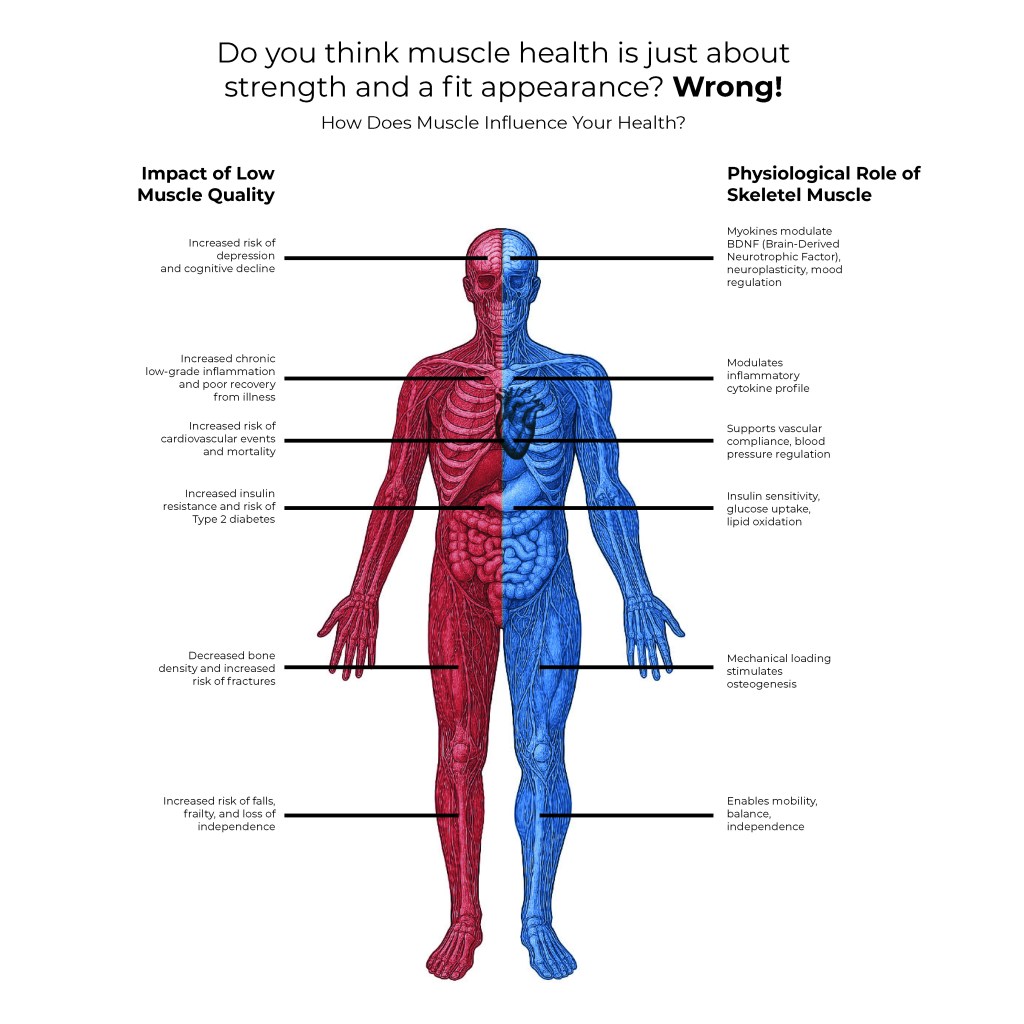
How Does Muscle Influence Your Health?
| Health Domain | Physiological Role | Impact of Low Muscle Mass / Quality |
| Metabolic | Insulin sensitivity, glucose uptake, lipid oxidation | Increased insulin resistance and risk of Type 2 diabetes |
| Neurological | Myokines modulate BDNF (Brain-Derived Neurotrophic Factor), neuroplasticity, mood regulation | Increased risk of depression and cognitive decline |
| Skeletal | Mechanical loading stimulates osteogenesis | Decreased bone density and increased risk of fractures |
| Cardiovascular | Supports vascular compliance, blood pressure regulation | Increased risk of cardiovascular events and mortality |
| Immune | Modulates inflammatory cytokine profile | Increased chronic low-grade inflammation and poor recovery from illness |
| Functional | Enables mobility, balance, independence | Increased risk of falls, frailty, and loss of independence |
Why Does Preserving Muscle “Quality” Matter?
Maintaining muscle health is imperative to healthy aging and disease prevention. The size of your muscle mass is actually less important that the “quality” of your muscle tissue.
The progressive loss of skeletal muscle mass and strength, known as sarcopenia, has been linked to:
- Increased all-cause mortality across multiple meta-analyses.
- Increased hospitalization rates and prolonged recovery times.
- Increased risk of disability and loss of independent living capacity.
- Metabolic dysregulation contributing to cardiovascular and endocrine disease.

EMBRACE YOUR BEST SELF
From hormone optimization to cartilage regeneration, we create personalized treatment plans based on thorough testing and monitoring.
We treat our patients for their unique needs and symptoms, rather than simply viewing lab results. We go beyond the numbers to alleviate our patient’s symptoms and get them back to living the lives they want to live.


