

Who Can Benefit from a Myomar Muscle Health Report?
Idea candidates for the Myomar Muscle Health Report include adults who wish to optimize their health and quality of life while aging, athletes, individuals interested in improving their fitness level, GLP-1 users, women in pre-menopause, menopause and post menopause, and men experiencing loss of muscle mass due to low and/or declining testosterone levels. Evaluating and monitoring muscle health provides critical information to enable participants to maximize their health and quality of life.
Individuals Over 40
Muscle loss caused simply by the aging process and the passing of time begins earlier than most people realize. Using the Myomar Muscle Health Report early in this process can identify patients who are at risk of declining muscle health. Patients use this information and related guidance to take appropriate steps to improve the trajectory of their muscle health before its deterioration impacts many other areas of the patient’s health.
Athletes and Fitness Enthusiasts
Over training and inadequate recovery time can significantly impact muscle development as well as the time and resources invested in that training. Myomar Muscle Health test reports help athletes train smarter, recover faster, and build strength with insights tailored to what their body really needs to maximize the benefits from their training.
GLP-1 Users
GLP-1 weight loss medications such as Ozempic and Wegovy often cause muscle loss and can lead to sarcopenia. The Myomar Muscle Health test detects the medication’s effect on muscle health and metabolic stress and provides critical insights into actionable steps that should be taken to prevent sarcopenia.
Menopause
Hormone fluctuations affect your body’s ability to absorb key nutrients and can wreak havoc on many aspects of health and quality of life. Muscle health typically deteriorates in both men and women when their hormone levels start to decline with aging. The Myomar Muscle Health test identifies warning signs related to protein absorption and high levels of free radicals.
Role of Myomar’s Muscle Health Test in Pre-Menopause Changes:
Myomar Molecular’s Muscle Health test is designed to detect biomarkers related to cellular energy metabolism and reactive oxygen species (ROS). This Health Canada approved urine analysis identifies levels of biomarkers that are particularly relevant in the context of pre-menopause, a transitional phase marked by significant hormonal and metabolic shifts that can impact muscle function, mitochondrial health, and oxidative balance.
Hormonal Shifts and Energy Biomarkers:
During pre-menopause, levels of estrogen and progesterone begin to decline. Both of these hormones play a key role in regulating mitochondrial function and ATP production. A reduction in estrogen and progesterone can cause:
- Decreased mitochondrial efficiency
- Altered glucose and fatty acid metabolism
- Reduced ATP availability in muscle tissue
The biomarkers used in the Myomar test can help identify early disruptions in energy metabolism.
Oxidative Stress and ROS Biomarkers:
The estrogen drop in pre-menopause is also linked to increased oxidative stress:
- Estrogen acts as an antioxidant and modulates ROS levels.
- Its reduction leads to an imbalance between ROS production and antioxidant defense.
Myomar’s Muscle Health Test can detect specific ROS-related biomarker involved in:
- Purine degradation intermediate which is a marker of DNA oxidative damage
- Metabolic production of super anion (O2) and hydroxy peroxide (H2O2)
Monitoring this marker helps reveal how the body is coping with oxidative stress, which is often implicated in muscle loss, fatigue, and inflammatory conditions associated with pre-menopause.
Clinical Relevance:
Early detection of changes facilitates preventative intervention with nutritional, hormonal, or exercise-based strategies before more severe symptoms or functional decline can occur. This information is highly valuable for personalized care and hormone replacement therapy in women approaching menopause, especially for those experiencing unexplained fatigue, reduced muscle strength, or poor exercise tolerance.
Why should you take the Myomar Muscle Test?
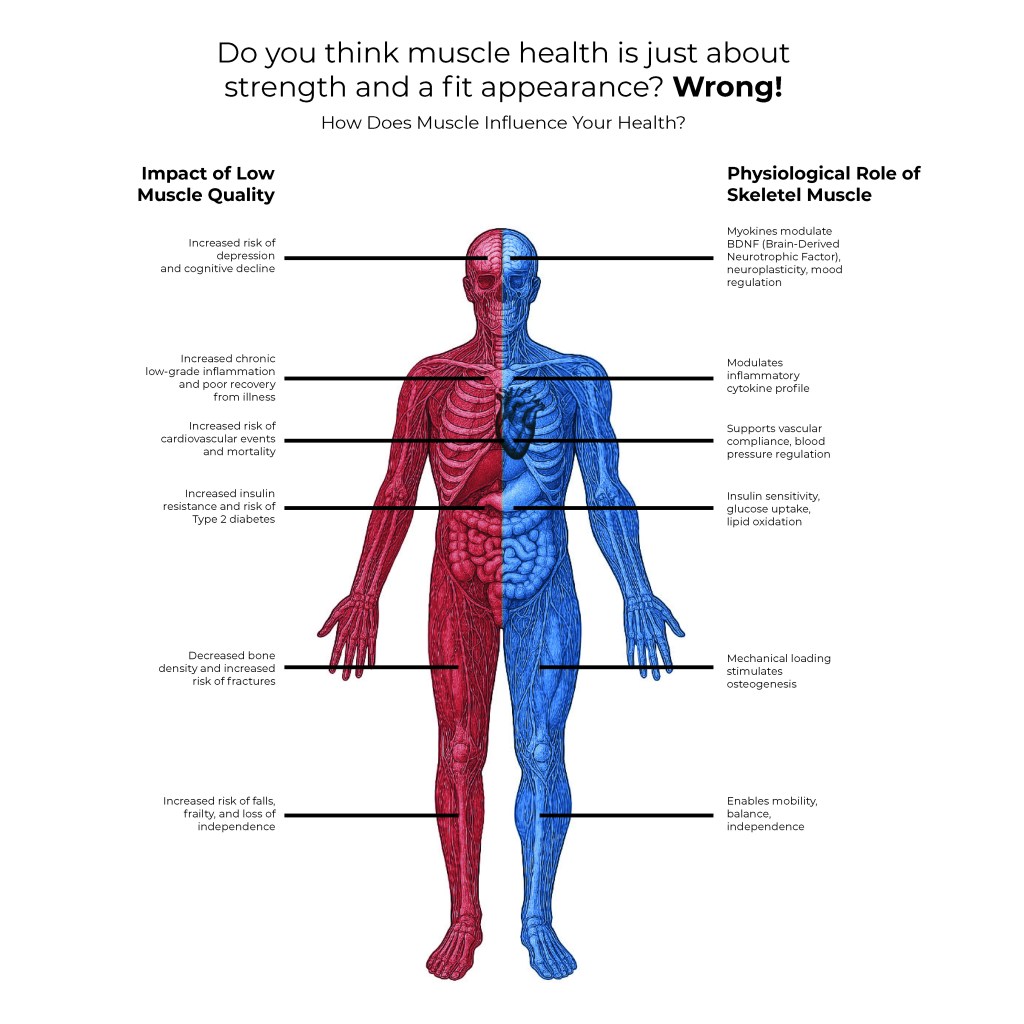
Skeletal muscle is an active driver of metabolic, neurological, skeletal, cardiovascular, immune, and functional health.
Measuring and tracking its status with a validated biomarker approach, like our Myomar Muscle Test, transforms muscle care from a reactive process to a data-driven, preventive strategy that you can see, understand, and act on!
Simple urine testing. Clear scores. Smarter decisions for long-term strength.
Call now to learn more!

EMBRACE YOUR BEST SELF
From hormone optimization to cartilage regeneration, we create personalized treatment plans based on thorough testing and monitoring.
We treat our patients for their unique needs and symptoms, rather than simply viewing lab results. We go beyond the numbers to alleviate our patient’s symptoms and get them back to living the lives they want to live.


